Spreading cultural awareness through fun and interactive Augmented Reality — turning heritage into an experience you can step inside.
Overview
North-East India holds rich tribal traditions, endangered crafts, and vibrant festivals, yet remains widely misunderstood and underrepresented. This project transforms Naga cultural heritage into immersive Snapchat AR lenses designed to make these stories interactive, shareable, and more visible to younger audiences.
The Three Lenses
Konyak Headhunter
Endangered Culture · Face Tracking
The Konyak tattoo tradition is disappearing — this lens digitally preserves it. Face-tracked tribal tattoo overlay, skull display stand background, and log drum music triggered by opening your mouth.
Hover to preview · Click to try →
Hornbill Festival
Festival of Festivals · Face Tracking
Nagaland's Hornbill Festival — the most iconic celebration of Naga unity — comes alive on your face. A bamboo cone hat tracked to your head, sparkle effects, and Hornbill ceremony music when you open your mouth.
Hover to preview · Click to try →
Tati Instrument
Traditional Folk · Hand Tracking
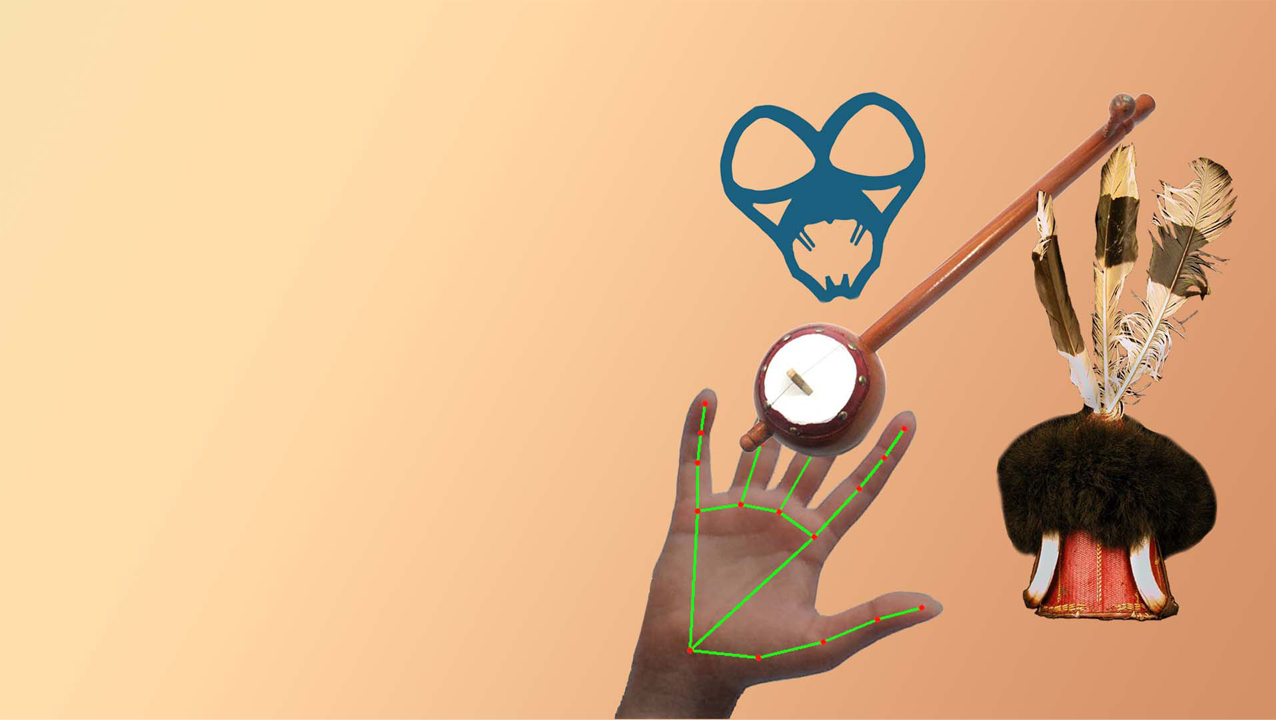
The Tati (also called Lubo or Libuh) is a single-stringed instrument used by Angami, Chakhesang, and Mao Nagas. Grab it from the air with a hand gesture — and Angami folk music begins to play.
Hover to preview · Click to try →
The Problem
Research revealed several reasons why North-East India remains unfamiliar to much of the country.
Geographic Isolation
Connected to the rest of India through the narrow 17–22 km-wide Siliguri Corridor, limiting travel and cultural exchange.
Media Misrepresentation
Mainstream media often portrays the North-East through conflict or stereotypes, overlooking its everyday cultural richness.
Low National Visibility
The eight North-Eastern states together make up less than 4% of India’s population, limiting political attention and cultural visibility.
Lack of Documentation
Authentic visuals of tribal tattoos, instruments, and traditional attire are scarce online, limiting cultural awareness and education.
Research Gap
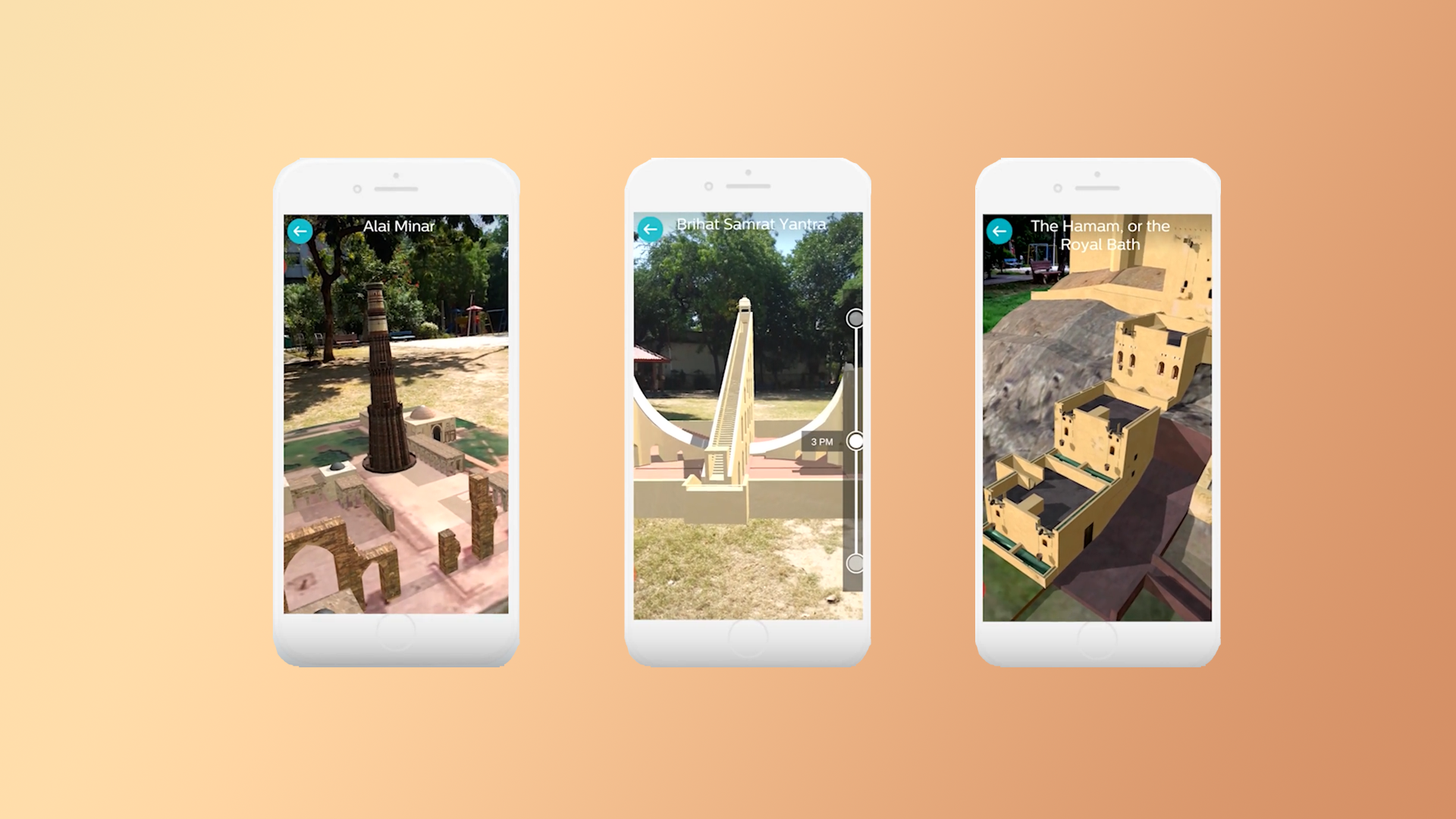
Most AR heritage projects focus on monuments and static experiences where users only observe. There was no youth-oriented AR experience using face and hand tracking to embody cultural elements — creating a key design opportunity.
Research Gap — existing AR cultural experiences were passive, not participatory
Design Process
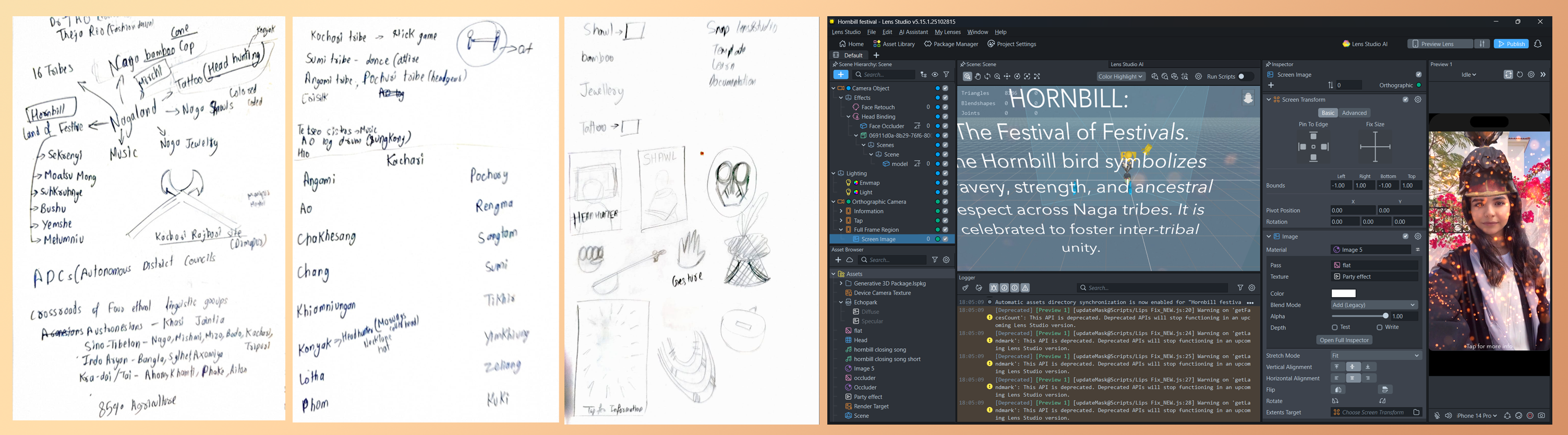
The project followed the Double Diamond process — exploring all 8 North-Eastern states before narrowing down to Nagaland for its visual identity and cultural depth. Each lens was selected for its uniqueness, cultural significance, and authentic references.
Diverge →
Cultural Research
Studied all 8 North-Eastern states, documenting festivals, tattoos, instruments, attire, and rituals across Nagaland.
Converge →
Narrow & Select
Selected three cultural elements — one endangered (Konyak tattoos), one iconic (Hornbill), and one everyday tradition (Tati).
Build →
Create & Test
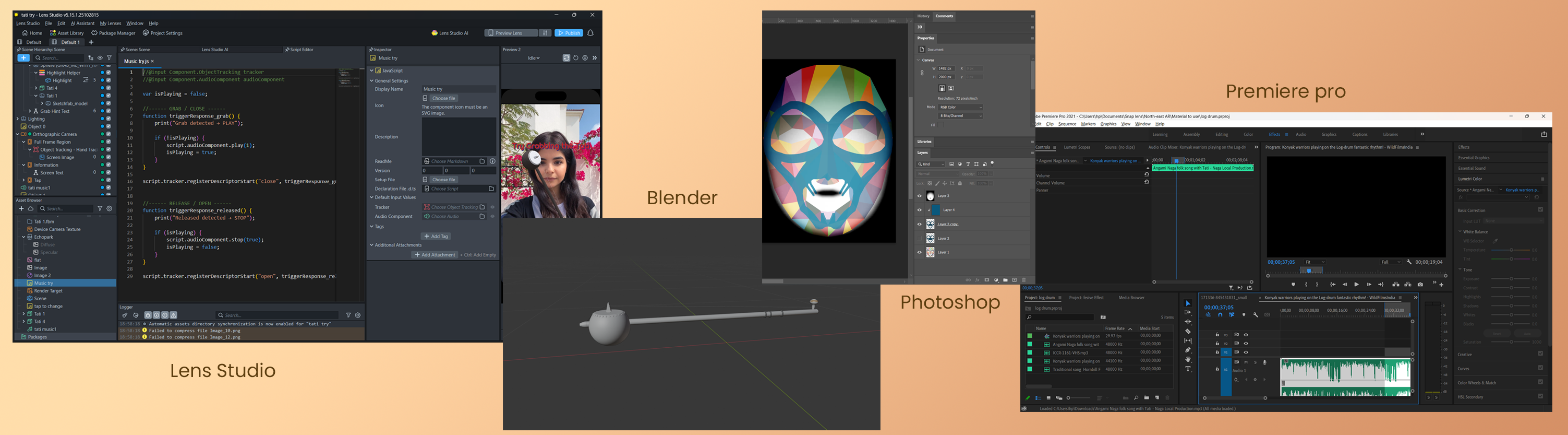
Built 3D models, tribal patterns, and AR interactions using Blender, Photoshop, Premiere Pro, Lens Studio, and JavaScript.
Design Process — Double Diamond · Diverge across 8 states · Converge on Nagaland
Tools Used
Tools Used — Lens Studio · Blender · Photoshop · Premiere Pro · JavaScript
Reflection
This project began with a question — how can I use AR in an impactful way? — and became one of the most meaningful projects I’ve designed.
The biggest challenge was the lack of authentic documentation,which reinforced the importance of preserving culture through accessible digital experiences.
"AR is not just a medium for entertainment.
It's a tool for remembering who we are."